
The short answer
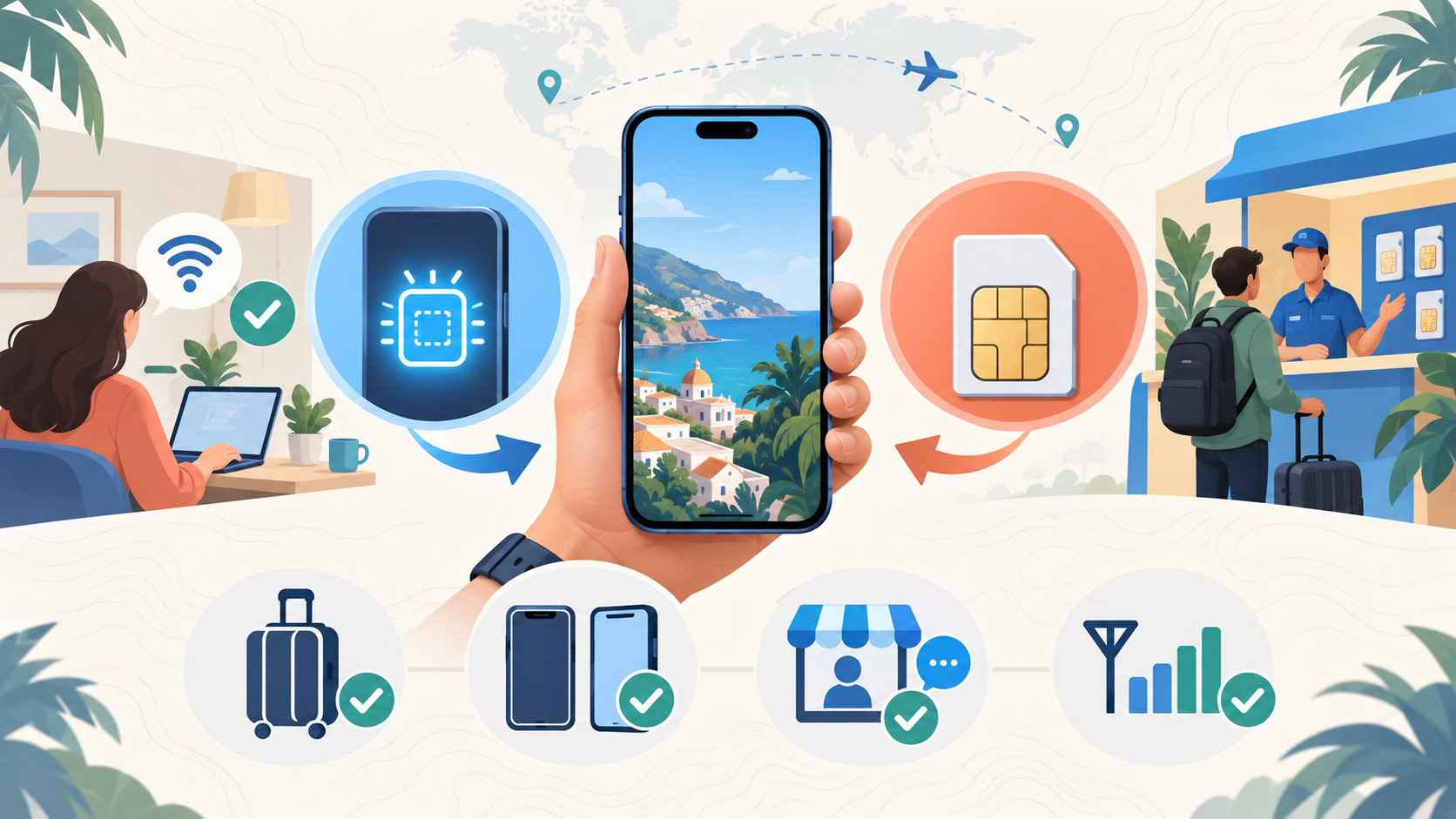
For most travelers with an unlocked, eSIM-compatible phone, eSIM is the easier default because it can often be prepared before departure while the primary SIM remains installed. Choose a physical SIM when you need a specific local-number plan, in-person retail help, or a phone without eSIM support.
The network matters more than the format
An eSIM is not automatically faster or more reliable than a physical SIM. The local network, roaming agreement, device bands, congestion, location, and plan rules have more influence on the connection you receive.
eSIM is convenient before departure
A compatible, unlocked phone can often add a travel eSIM on stable Wi-Fi before the trip. Check the exact validity trigger before installation because purchase, installation, and first network connection do not always start the plan at the same time.
A physical SIM can solve different needs
A physical SIM may be the practical choice when the phone lacks eSIM support, a specific local plan includes the voice or SMS number you need, or you value shop-assisted activation. Confirm those features rather than assuming every local SIM includes them.
Protect your primary number
A dual-SIM phone can often keep your usual number available while the travel line handles mobile data. Select the travel line for data, turn off automatic data switching, and confirm the primary carrier's call, SMS, and roaming charges.
Compare the exact plan, not only the format
For either format, confirm the local network, usable data, validity trigger, hotspot policy, refund terms, final checkout total, and whether voice or SMS is included. The format does not repair a plan that expires too early or omits a feature you need.
Keep a recovery path
Save installation or activation details and the provider's support route offline. For a critical work day or remote route, identify a separate fallback such as trusted Wi-Fi or another compatible mobile option.